
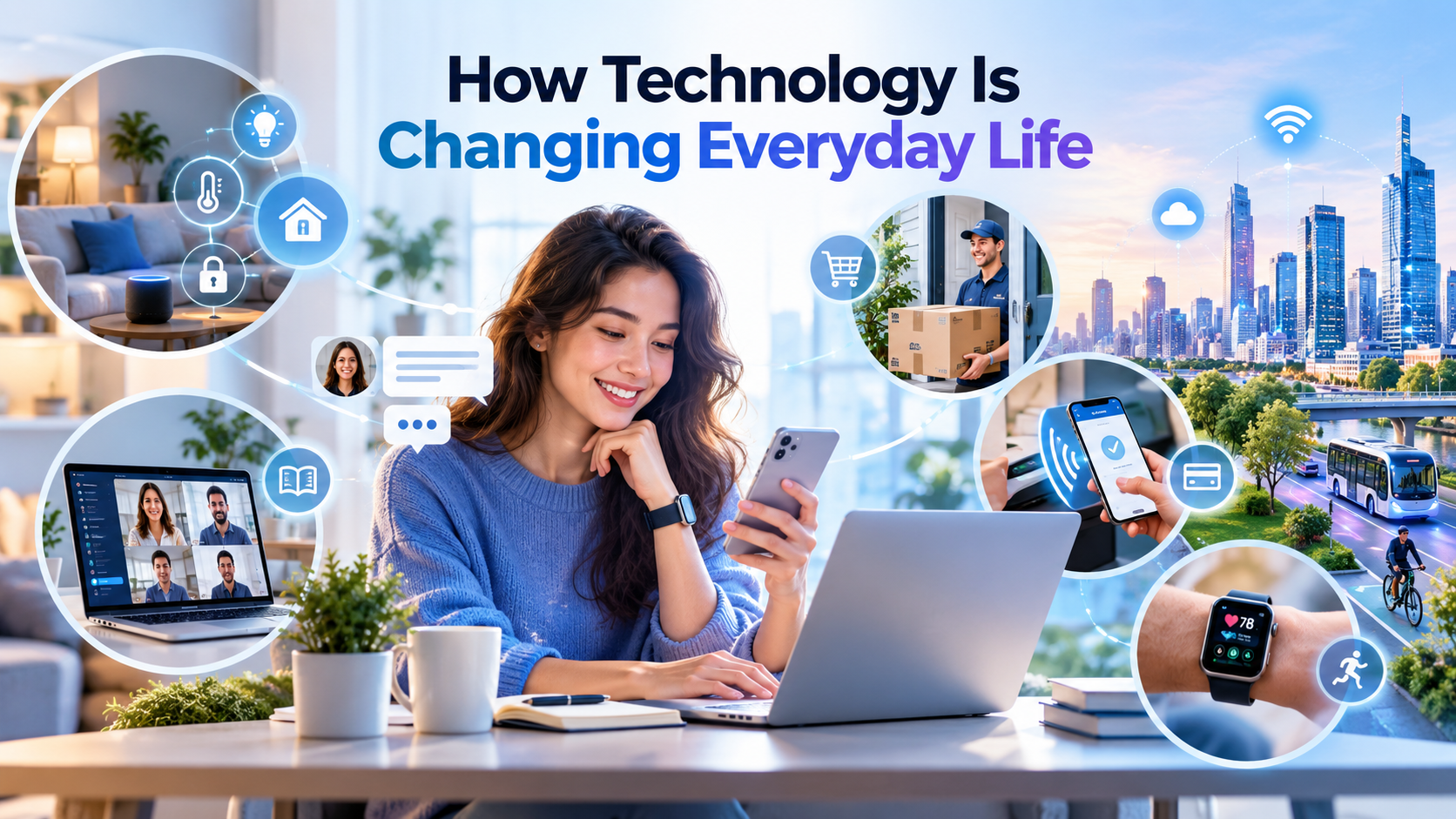
Technology has become an important part of modern life. From smartphones and computers to artificial intelligence and smart home devices, digital tools are changing the way people work, communicate, learn, and entertain themselves. What once seemed like advanced technology is now becoming part of everyday routines.
Smartphones and Digital Communication
Smartphones are one of the clearest examples of how technology has changed daily life. People can now communicate with friends, family members, and businesses within seconds. Messaging apps, video calls, social media platforms, and email have made communication faster and more convenient.
Smartphones are also used for many other activities. People can manage their finances, order food, navigate unfamiliar locations, shop online, watch videos, and access educational resources from a single device.
Artificial Intelligence Is Growing
Artificial intelligence (AI) is another technology that is rapidly changing different industries. AI systems can analyze information, recognize patterns, generate content, translate languages, and assist users with various tasks.
Businesses are using AI for customer support, data analysis, marketing, and automation. Students and professionals are also using AI-powered tools to research topics, organize information, and improve productivity.
However, AI also creates new challenges. People need to understand how these systems work and recognize that AI-generated information can sometimes contain mistakes. Human judgment and fact-checking remain important when using AI tools.
Technology in Education
Education has also changed significantly because of digital technology. Students can access online courses, digital libraries, educational videos, and interactive learning platforms from almost anywhere.
Teachers can use presentations, online assignments, digital quizzes, and educational software to make lessons more interactive. Remote learning has also made education more accessible for people who cannot attend traditional classrooms.
The growing use of technology means digital skills are becoming increasingly valuable. Learning how to search for reliable information, use online tools, protect personal data, and communicate digitally can help students and professionals.
Smart Homes and Connected Devices
Smart technology is also entering homes. Smart televisions, security cameras, speakers, lights, watches, and other connected devices can communicate through the internet.
These devices can make certain tasks more convenient. For example, users can control lights, monitor security cameras, or manage other equipment through mobile applications. However, connected devices can also create privacy and security concerns.
Using strong passwords, updating software, and enabling available security features can help reduce some common risks.
The Future of Technology
Technology will continue to develop as companies and researchers introduce new tools and services. Areas such as artificial intelligence, robotics, cloud computing, cybersecurity, and connected devices are likely to remain important.
The most useful approach is not simply to adopt every new technology. Instead, people should understand what a tool does, how it can help, and what risks it may create.
Technology can make everyday tasks faster and more convenient, but responsible use is equally important. By developing digital skills and staying informed, people can make better use of the technologies available to them.