
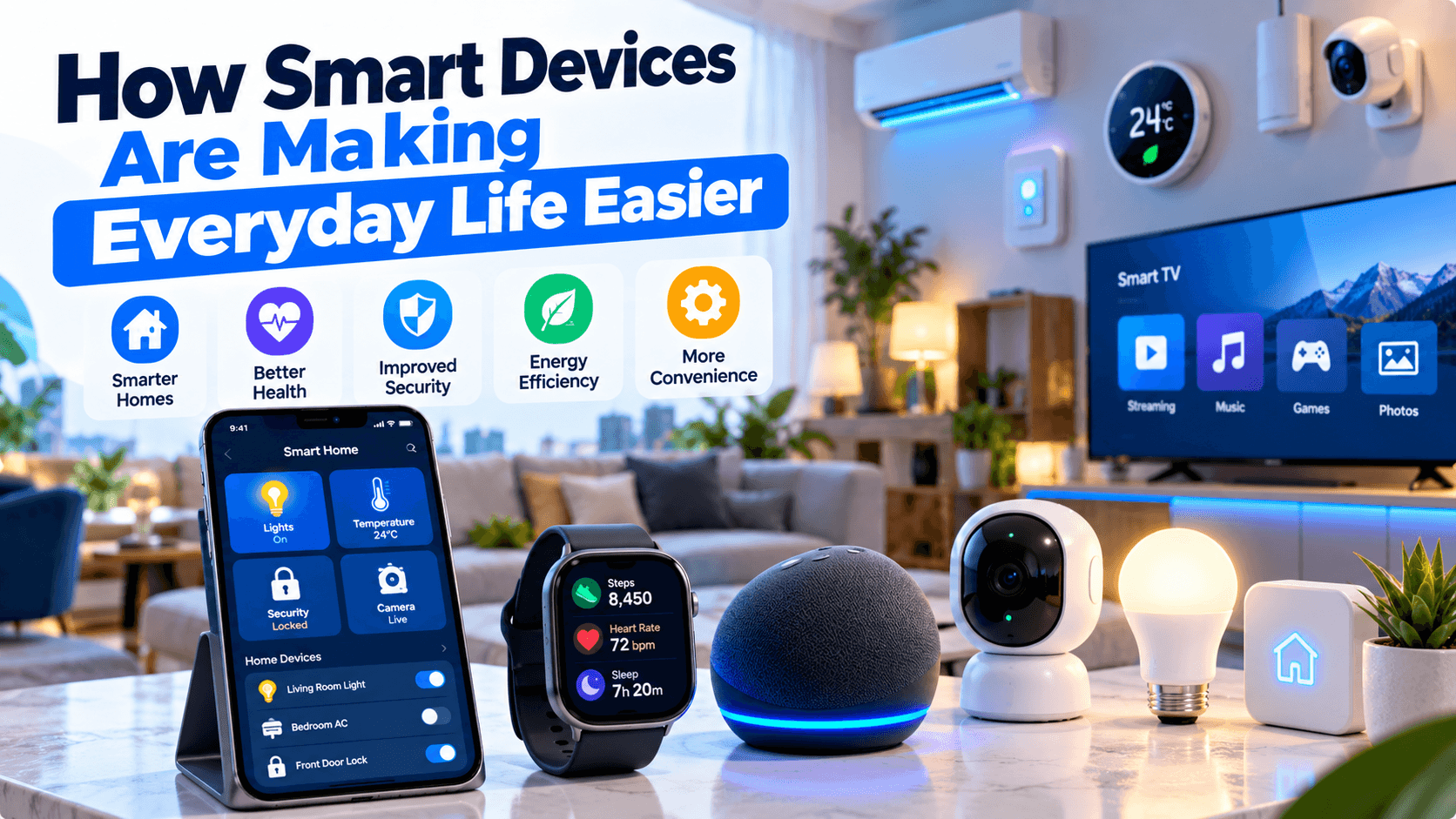
Smart devices have become a normal part of everyday life. Smartphones, smartwatches, home assistants, security cameras, smart TVs, and connected appliances are helping people manage daily tasks more easily.
These devices use internet connectivity, sensors, software, and automation to provide useful information and perform certain actions automatically. As technology improves, smart devices are becoming more affordable, powerful, and convenient.
What Are Smart Devices?
Smart devices are electronic products that can connect to the internet or communicate with other devices. They can collect information, respond to commands, and sometimes make automatic decisions based on settings or user behavior.
For example, a smartwatch can track daily activity, while a smart thermostat can adjust indoor temperature according to a schedule.
Common Smart Devices Used Today
Smart Device | Common Use | Main Benefit |
|---|---|---|
Smartphone | Communication, apps, navigation | All-in-one daily device |
Smartwatch | Fitness and notifications | Quick health and activity tracking |
Smart Speaker | Voice commands and information | Hands-free assistance |
Smart Security Camera | Home monitoring | Improved security |
Smart TV | Streaming and entertainment | Easy access to digital content |
Smart Thermostat | Temperature control | Better energy management |
Smart Lighting | Remote lighting control | Convenience and efficiency |
Smartphones Make Daily Tasks Easier
Smartphones are among the most widely used smart devices.
People can use them to communicate, check emails, navigate unfamiliar areas, make digital payments, take photos, watch videos, and manage work tasks.
Everything in One Device
A smartphone can replace several traditional tools, including cameras, calculators, maps, calendars, music players, and alarm clocks.
This makes daily activities faster and more convenient.
Smartwatches Support Health and Fitness
Smartwatches have become popular for tracking daily activity.
Many models can monitor steps, heart rate, workouts, sleep patterns, and other fitness information.
Staying Active
Activity reminders can encourage users to move more throughout the day. Workout tracking can also help people understand their exercise habits and monitor progress.
However, smartwatch health information should generally be treated as supportive data rather than a replacement for professional medical advice.
Smart Homes Improve Convenience
Smart home technology allows users to control different household devices through smartphones, tablets, or voice commands.
Lights, thermostats, cameras, doorbells, and appliances can often be managed remotely.
Automated Daily Routines
Users may create routines that turn lights on at a certain time, adjust temperature before arriving home, or switch off devices at night.
Automation can reduce repetitive tasks and make homes easier to manage.
Smart Devices Can Improve Home Security
Connected cameras, video doorbells, motion sensors, and smart locks can help homeowners monitor their property.
Some devices can send notifications when movement is detected or when someone arrives at the door.
Remote access also allows users to check their homes while they are away.
Smart Technology Can Save Energy
Smart devices may also help reduce unnecessary energy use.
For example, smart thermostats can adjust heating or cooling based on schedules, while smart lights can automatically turn off when they are not needed.
Over time, better energy management may help reduce household energy consumption.
Privacy and Security Risks
Smart devices also create privacy and cybersecurity concerns.
Because many devices collect information and connect to the internet, weak passwords or outdated software can increase security risks.
How to Use Smart Devices Safely
Users should create strong passwords, enable available security features, install software updates, and review privacy settings.
It is also important to buy connected devices from trustworthy manufacturers that provide ongoing security updates.
The Future of Smart Devices
Future smart devices are likely to become more connected and automated.
Artificial intelligence may help devices understand user preferences and respond more naturally. Homes, cars, workplaces, and wearable devices could also communicate more effectively with one another.
This could make daily routines even more convenient.
Conclusion
Smart devices are changing everyday life by improving communication, convenience, security, fitness tracking, entertainment, and energy management.
Although connected technology offers many benefits, users should also pay attention to privacy and cybersecurity. By choosing reliable devices and using strong security practices, people can enjoy the advantages of smart technology while reducing potential risks.