
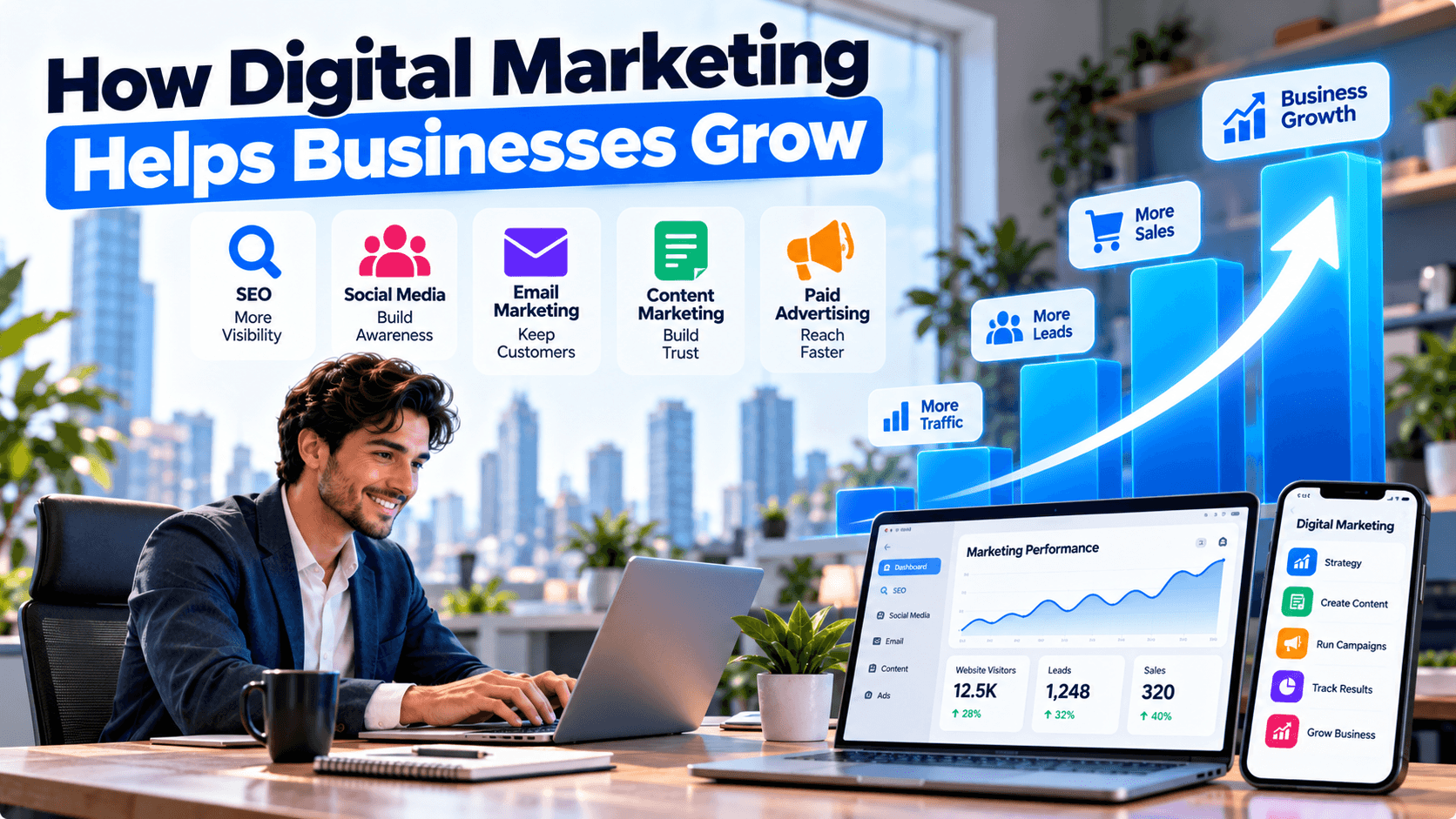
Digital marketing has become one of the most important tools for modern businesses. Whether a company is small, medium-sized, or large, online marketing can help it reach more customers, build brand awareness, increase sales, and compete more effectively.
Today, people spend a large amount of time using search engines, social media, websites, email, and mobile apps. Because of this, businesses need a strong online presence if they want to connect with potential customers.
What Is Digital Marketing?
Digital marketing refers to the use of online platforms and digital technologies to promote products, services, and brands.
It includes search engine optimization, social media marketing, email campaigns, paid advertising, content marketing, and website promotion.
Unlike traditional advertising, digital marketing often allows businesses to track results more easily and adjust campaigns based on performance.
Main Types of Digital Marketing
Digital Marketing Method | Main Purpose | Common Example |
|---|---|---|
SEO | Improve search visibility | Ranking a business website on Google |
Social Media Marketing | Build engagement and awareness | Posting on Facebook or Instagram |
Email Marketing | Communicate with customers | Newsletters and promotional emails |
Content Marketing | Educate and attract users | Blog posts, guides, and videos |
Paid Advertising | Generate quick visibility | Search and social media ads |
Influencer Marketing | Reach targeted audiences | Product promotion through creators |
Video Marketing | Explain and promote visually | Tutorials, product demos, short videos |
SEO Helps Businesses Get Found Online
Search engine optimization helps websites appear in search results when people look for products, services, or information.
A business that ranks well for relevant search terms may receive more website visitors without paying for every click.
Why SEO Matters
SEO can improve long-term visibility, build trust, and bring targeted traffic to a website.
Businesses can improve SEO by publishing useful content, improving website speed, using clear page titles, and making pages easy to navigate.
Social Media Builds Brand Awareness
Social media platforms allow businesses to communicate directly with customers.
Companies can share updates, product launches, educational content, customer stories, and promotional offers.
Creating Stronger Customer Relationships
Regular interaction can help businesses build a loyal audience.
Responding to comments and messages also makes customers feel heard and supported.
Email Marketing Supports Customer Retention
Email marketing is useful for staying connected with existing customers.
Businesses can send newsletters, product updates, discounts, reminders, and useful information directly to subscribers.
Personalized Communication
Email campaigns can often be personalized based on customer interests or past activity.
This can make marketing messages more relevant and improve engagement.
Content Marketing Builds Trust
Content marketing focuses on providing useful information instead of only promoting products.
Blog articles, tutorials, guides, videos, case studies, and infographics can help customers understand a topic or solve a problem.
Helping Before Selling
When businesses consistently publish valuable content, they can build authority in their industry.
Customers may be more likely to trust a company that provides helpful information before asking for a purchase.
Paid Advertising Delivers Faster Reach
Paid advertising can help businesses reach new customers quickly.
Search engines and social platforms often allow companies to target people based on interests, location, search behavior, or demographics.
Measuring Results
One major advantage of digital advertising is performance tracking.
Businesses can monitor impressions, clicks, conversions, and other metrics to understand whether a campaign is working.
Digital Marketing Can Be Cost-Effective
Traditional advertising through television, print, or billboards can be expensive.
Digital marketing gives businesses more control over their budgets.
Small companies can begin with limited spending and increase investment if campaigns generate good results.
Challenges of Digital Marketing
Digital marketing also has challenges.
Competition online can be strong, advertising costs can rise, and algorithms may change.
Businesses also need to create high-quality content, protect customer data, and avoid misleading advertising.
Consistency Is Important
Results do not always happen immediately.
SEO, content marketing, and brand building often require consistent effort over time.
How Businesses Can Improve Their Digital Marketing
Businesses should begin by understanding their target audience.
They should identify what customers need, where they spend time online, and which type of content is most useful.
Tracking website traffic, sales, leads, and engagement can also help companies improve their strategies.
A clear website, useful content, strong customer service, and consistent branding can make digital marketing more effective.
The Future of Digital Marketing
Digital marketing will continue to change as technology develops.
Artificial intelligence, automation, personalization, short-form video, voice search, and data analytics are already influencing how businesses communicate with customers.
Companies that adapt to new tools while maintaining trust and transparency may have a stronger chance of long-term success.
Conclusion
Digital marketing helps businesses reach customers, build trust, increase visibility, and grow sales.
SEO, social media, email, content, and paid advertising can all play important roles in a successful strategy.
Businesses do not need to use every marketing channel at once. A focused approach based on customer needs, clear goals, and measurable results is often more effective.