
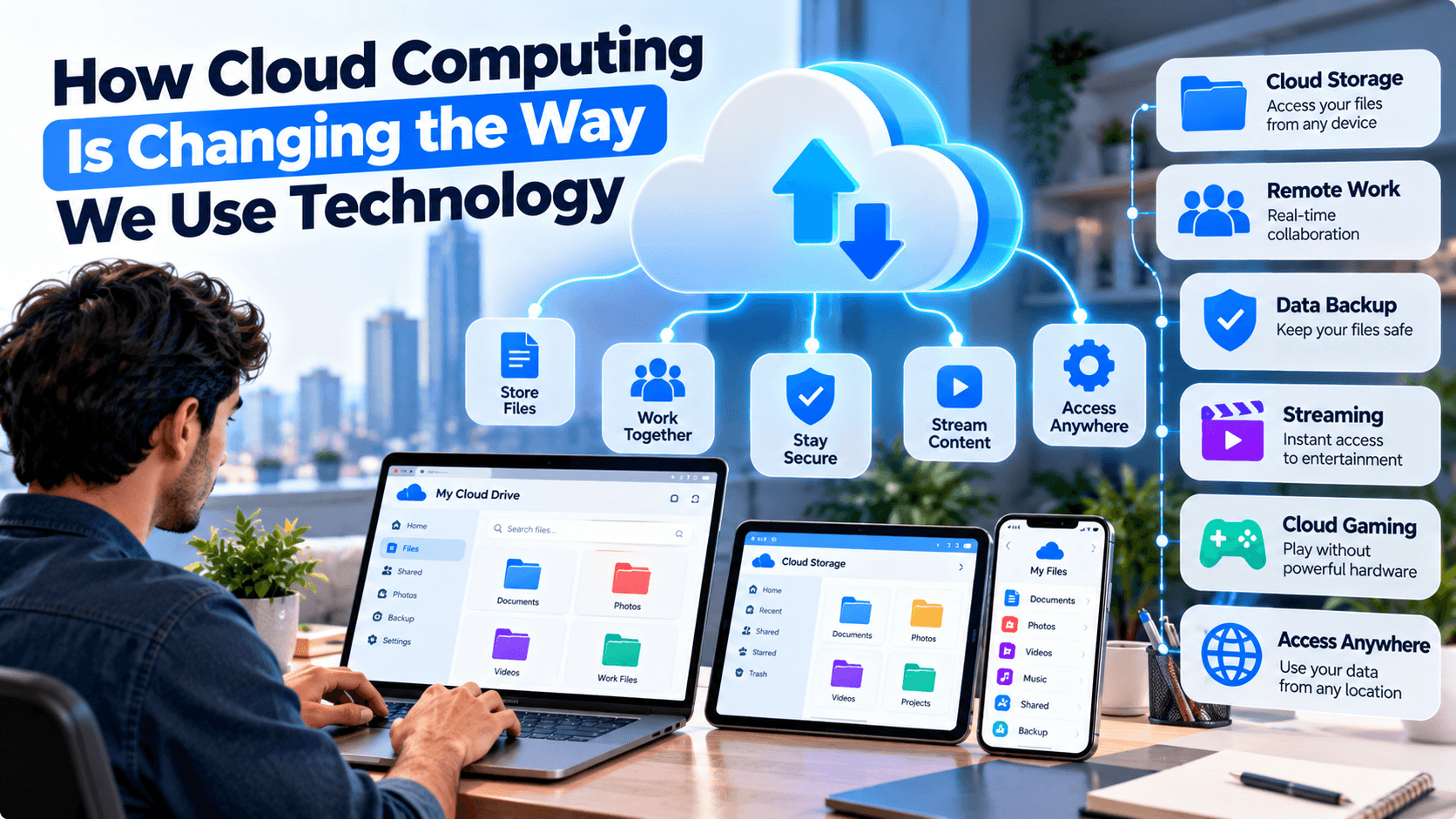
Cloud computing has become an important part of modern technology. It allows people and businesses to store files, run applications, and access services over the internet instead of depending only on a local computer or device.
From online photo storage to business software and video streaming, cloud technology is used in many everyday activities. Its flexibility, convenience, and scalability have made it a major part of the digital world.
What Is Cloud Computing?
Cloud computing means using remote servers on the internet to store, process, and manage data.
Instead of keeping everything on one computer, users can access files and applications from different devices as long as they have an internet connection.
For example, a person can save a document online and open it later from a laptop, tablet, or smartphone.
Common Uses of Cloud Computing
Cloud Service | Everyday Use | Main Benefit |
|---|---|---|
Cloud Storage | Saving files and photos | Access from multiple devices |
Online Email | Sending and receiving messages | No local email server needed |
Streaming Services | Watching videos and listening to music | Instant access to content |
Cloud Backup | Protecting important files | Easier data recovery |
Business Software | Managing projects and customers | Better collaboration |
Online Documents | Creating and editing files | Real-time teamwork |
Cloud Gaming | Playing games through remote servers | Less dependence on powerful hardware |
Cloud Storage Makes Files Easier to Access
Cloud storage is one of the most common uses of cloud computing.
Users can upload photos, documents, videos, and other files to online storage platforms. These files can then be accessed from different devices.
Better File Sharing
Cloud storage also makes sharing easier. Instead of sending large files through email, users can share access to an online folder or document.
This can be useful for students, remote workers, businesses, and families.
Cloud Computing Supports Remote Work
Remote work has increased the importance of cloud-based technology.
Employees can use online platforms to access documents, communicate with coworkers, manage projects, and attend virtual meetings from different locations.
Real-Time Collaboration
Cloud-based documents allow several people to work on the same file at the same time.
Changes can appear instantly, which can reduce the need to send multiple versions of the same document back and forth.
Businesses Can Scale More Easily
Cloud computing gives businesses the ability to increase or reduce their technology resources based on demand.
A growing company may need more storage, processing power, or software access. Cloud services can often provide these resources without requiring the company to purchase large amounts of physical hardware.
Lower Infrastructure Costs
Businesses may also reduce some costs related to servers, maintenance, and IT infrastructure.
However, cloud services still involve ongoing expenses, so companies need to manage their subscriptions carefully.
Cloud Backup Helps Protect Data
Losing important files because of a damaged computer or device can be a serious problem.
Cloud backup services automatically copy data to remote servers. If the original device is lost or damaged, users may be able to restore their files.
This provides an additional layer of protection for important documents and personal data.
Cloud Computing and Entertainment
Cloud technology is also widely used for entertainment.
Streaming platforms store large libraries of movies, music, and other digital content on remote servers. Users can access this content without downloading every file permanently.
Cloud gaming uses a similar idea by running games on powerful remote computers and streaming the gameplay to the user's device.
Security and Privacy Concerns
Cloud computing offers many benefits, but it also creates security and privacy challenges.
Users often store important personal or business information online, so strong security is essential.
Protecting Cloud Accounts
People should use strong passwords, enable multi-factor authentication, and avoid sharing account credentials.
Businesses should also carefully manage employee access and review their security settings regularly.
Dependence on Internet Connections
One limitation of cloud computing is its dependence on internet access.
If a connection is slow or unavailable, users may have difficulty accessing cloud-based files and services.
Some applications provide offline options, but full functionality may still require an internet connection.
The Future of Cloud Computing
Cloud computing is expected to continue growing as more services move online.
Artificial intelligence, smart devices, business automation, and large-scale data processing increasingly depend on cloud infrastructure.
Faster networks may also make cloud-based services more responsive and accessible.
Conclusion
Cloud computing has changed the way people store information, use software, collaborate, and access entertainment.
Its main advantages include convenience, flexibility, easier collaboration, and access from multiple devices.
At the same time, users and businesses should take security, privacy, internet reliability, and ongoing costs into account. When used carefully, cloud computing can make technology more flexible and efficient for everyday life.